Table of Contents
ToggleSummary
- An anomaly scan is a detailed ultrasound done between 18 and 22 weeks of pregnancy.
- It helps check the baby’s overall growth and development and examines important organs like the brain, heart, and spine for abnormalities.
Introduction
Pregnancy involves several important scans and the anomaly scan is one of the most important ones.
A common question many people have is what does an anomaly scan detect?
This scan offers a closer look at the baby’s growth and development, helping doctors identify possible concerns early.
Knowing what the scan checks, what it can reveal, and its limitations can make the experience less stressful and help you feel more prepared.
What Does an Anomaly Scan Detect?
During the scan, the following key areas are assessed:
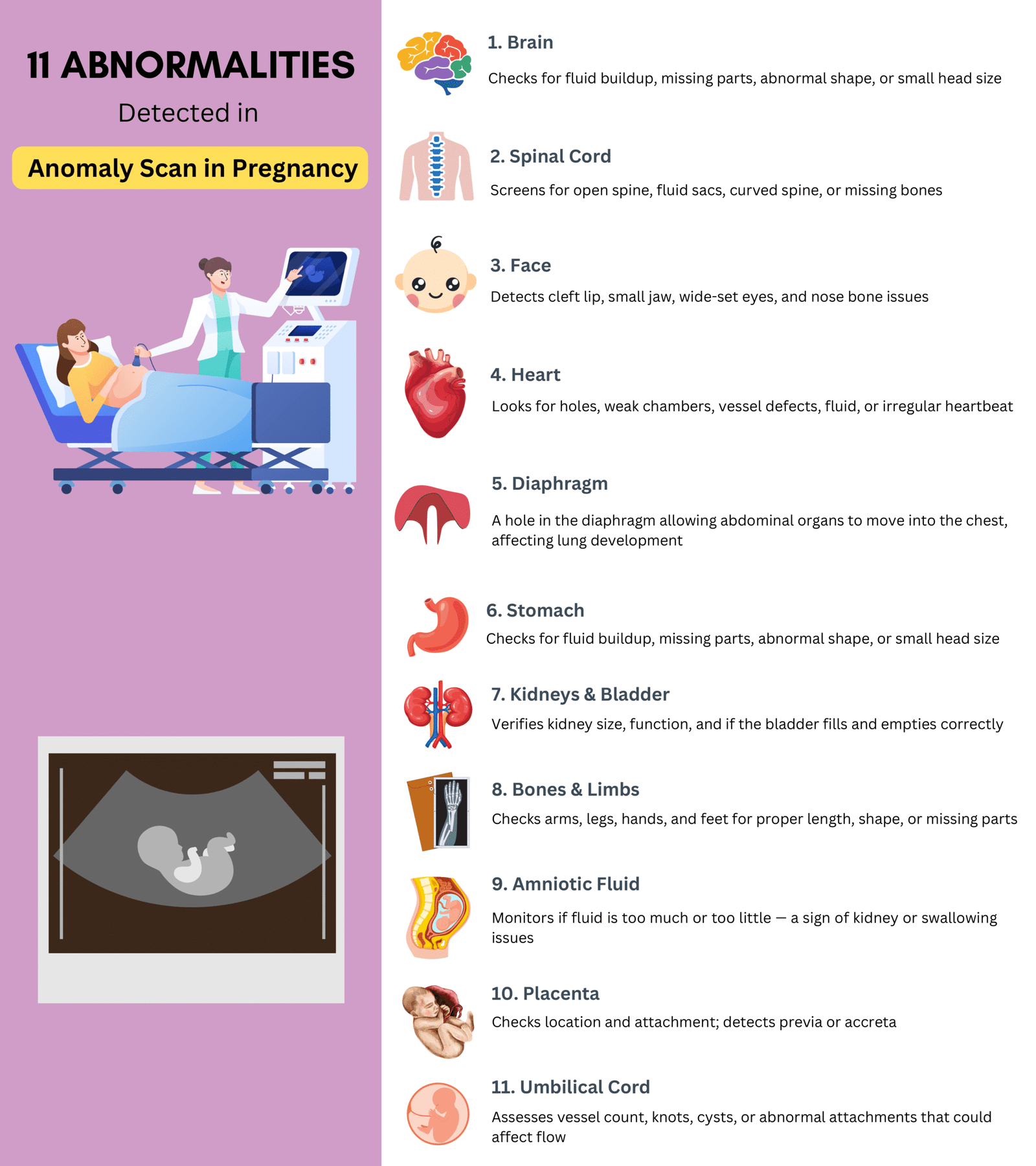
- Brain and Skull: The scan checks how the baby’s brain and skull are developing and looks for any visible concerns.
- Spine: It examines the baby’s spine to make sure it is forming and closing properly.
- Face: The baby’s face, including the lips and jaw, is checked for conditions such as cleft lip or palate.
- Heart: The scan carefully looks at the baby’s heart, including its chambers, valves, and blood vessels, to ensure normal development.
- Abdominal Wall / Diaphragm: It checks whether the abdominal organs are enclosed properly and if the diaphragm is developing as expected.
- Stomach and Intestines: The scan confirms that the stomach and digestive organs are present and developing normally.
- Kidneys: Both kidneys are examined to ensure they are present, positioned correctly, and developing well.
- Bones: The baby’s bones are checked to see if they are growing and forming properly.
- Limbs: The scan looks at the baby’s arms, legs, hands, and feet to ensure healthy development.
- Amniotic Fluid: The amount of amniotic fluid around the baby is measured to make sure it is within a healthy range.
- Placenta and Umbilical Cord: The placenta and umbilical cord are checked to ensure the baby is receiving proper blood flow and nourishment.
Can Anomaly Scan Detect All Abnormalities?
Although the anomaly scan is highly detailed and provides important information about the baby’s development, it cannot identify every condition or abnormality.
It mainly identifies physical or structural abnormalities that can be seen on an ultrasound. Genetic or metabolic disorders such as autism, and minute holes in the heart cannot be detected.
Why is Early Detection Important?
- Monitoring the pregnancy closely
- Identifies conditions that may need treatment after birth
- Helps plan appropriate care during pregnancy and delivery
- Making informed decisions about care and support
What Else Does the Anomaly Scan Assess Apart from Abnormalities?
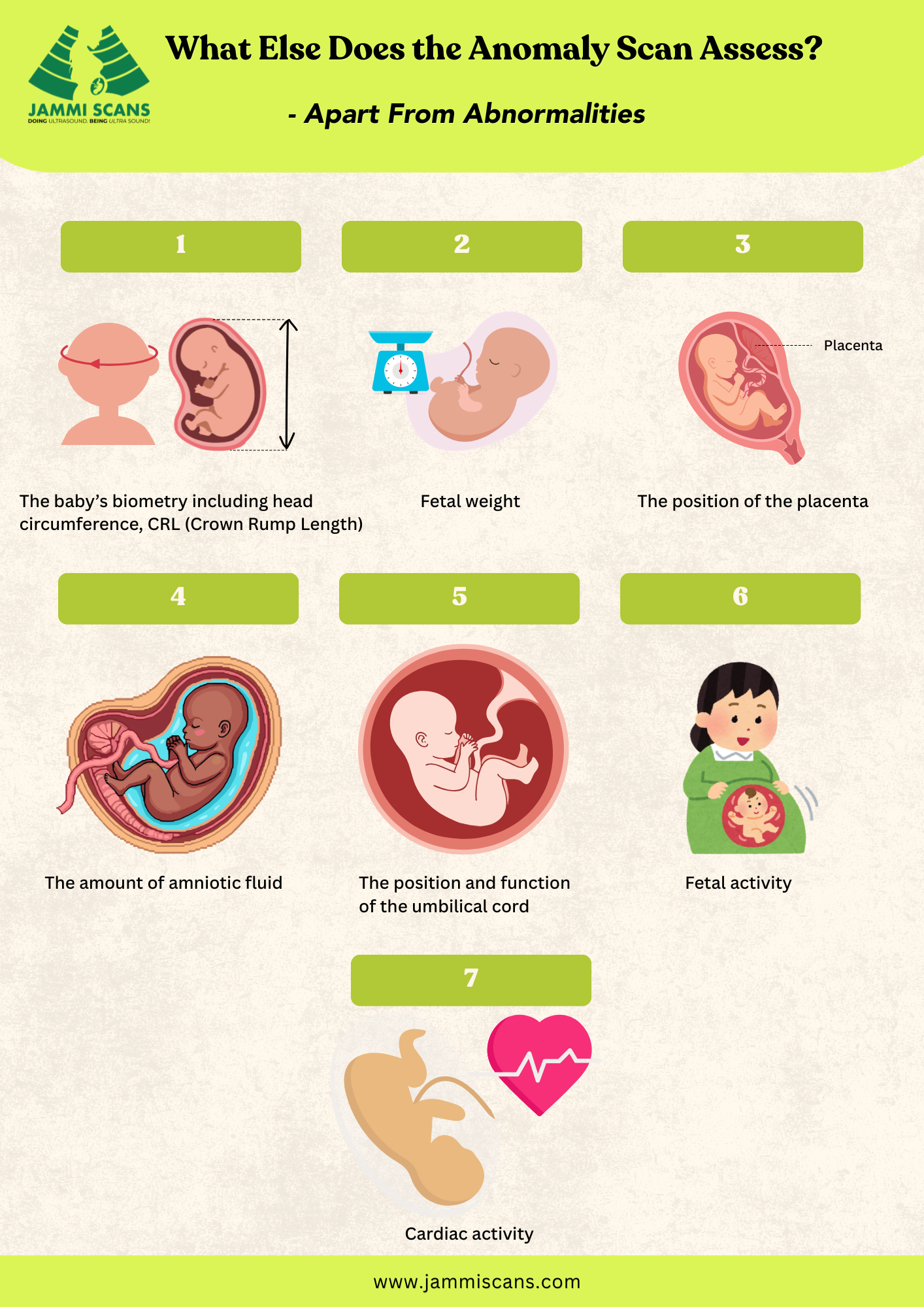
- The baby’s biometry including head circumference, CRL (Crown Rump Length)
- Fetal weight
- The position of the placenta
- The amount of amniotic fluid
- The position and function of the umbilical cord
- Fetal activity
- Cardiac activity
When Should You Be Concerned About Results?
While over 90% of anomaly scans do not show major issues, a small percentage of expectant mothers may require further evaluation if unusual findings are observed during the scan.
Doctors might suggest further tests or closer monitoring if they suspect:
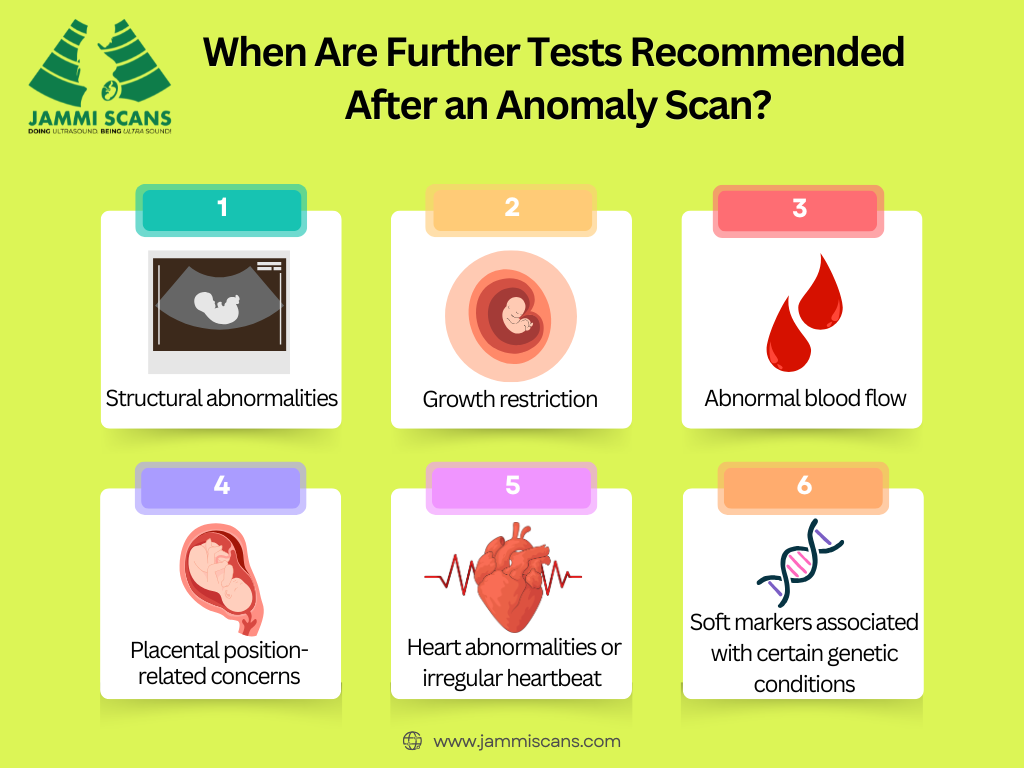
- Structural abnormalities
- Growth restriction
- Abnormal blood flow
- Placental position-related concerns
- Heart abnormalities or irregular heartbeat
- Soft markers associated with certain genetic conditions.
Conclusion
An anomaly scan is an important milestone in pregnancy, offering a detailed view of your baby’s development. It helps detect structural abnormalities, monitor growth, and guide medical care when necessary.
If you are nearing your second trimester, it is important to schedule your anomaly scan between 18 and 22 weeks of pregnancy for a detailed assessment.
At Jammi Scans, Dr. Deepthi Jammi, FMF-Certified Fetal Medicine Specialist personally performs anomaly scans and guides patients through the next steps.
Call 7338771733 to book your appointment.
FAQ
1. Can an anomaly scan detect Down syndrome?
An anomaly scan may show certain markers linked to Down syndrome, but it cannot confirm the condition. Additional tests are usually recommended.
2. Can an anomaly scan detect heart defects?
Yes, many major heart defects can be identified, though minor ones may sometimes be missed.
3. Does an anomaly scan check blood flow in the baby?
Yes, usually, an anomaly scan is carried out along with doppler which assess the blood flow to the baby.
4. Can an anomaly scan detect gender?
Yes, the baby’s sex may be visible during an anomaly scan. However, under the PCPNDT Act, it is illegal to disclose the baby’s gender during pregnancy in India.
5. Can an anomaly scan detect conditions that need surgery after birth?
Yes, in some cases an anomaly scan can detect structural conditions that may require treatment or surgery after birth. These include issues like cleft lip and palate, certain heart defects, and spina bifida.
Reviewed by Dr. Deepthi Jammi - Fetal Medicine Specialist
Dr. Deepthi Jammi (Director, Jammi Scans) is a qualified OB/GYN and Post-Doc in Maternal Fetal Medicine. As a pregnancy ultrasound expert, she is passionate about healthy pregnancies and works towards spreading awareness on the latest diagnostic options available for parents to choose from. Dr.Deepthi has received gold medals and awards in Fetal Medicine at international and national conferences, and has appeared in numerous prestigious regional magazines and TV interviews.