
Table of Contents
ToggleSummary
Medically Reviewed by Dr. Deepthi Jammi (MS- OB/GYN – Fetal Medicine Specialist)
- Brown discharge during pregnancy is a common occurrence and is usually harmless.
- Research suggests that 20–30% of pregnant women experience spotting in the first trimester.
- However, it is important to consult your doctor if the bleeding is heavy or accompanied by abdominal pain, fever, or other concerning symptoms.
Introduction
Seeing brown discharge during pregnancy can feel worrying, especially for first-time mothers.
The reassuring news is that brown discharge is very common, particularly in early pregnancy, and is often harmless.
This guide explains the causes, risks, and when you should seek medical help.
What is Brown Discharge During Pregnancy?
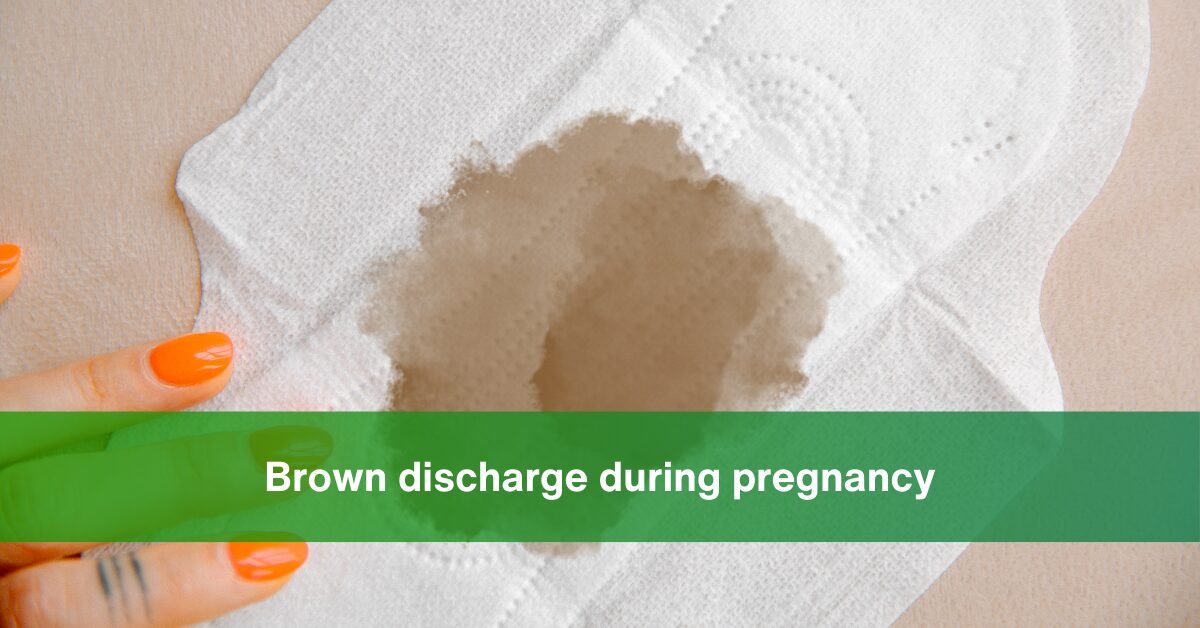
Brown discharge refers to old blood mixed with cervical mucus. When blood stays longer inside the vagina, it oxidizes and turns brown.
It is usually mild, short-lived, and not typically associated with pain or other symptoms.
Experiencing Brown Discharge? Consult Dr. Deepthi Jammi Today!
Is It Normal to Have Brown Discharge When Pregnant?
Yes — in many cases, brown discharge is normal.

Source: Link
10 Causes of Brown Discharge in Pregnancy
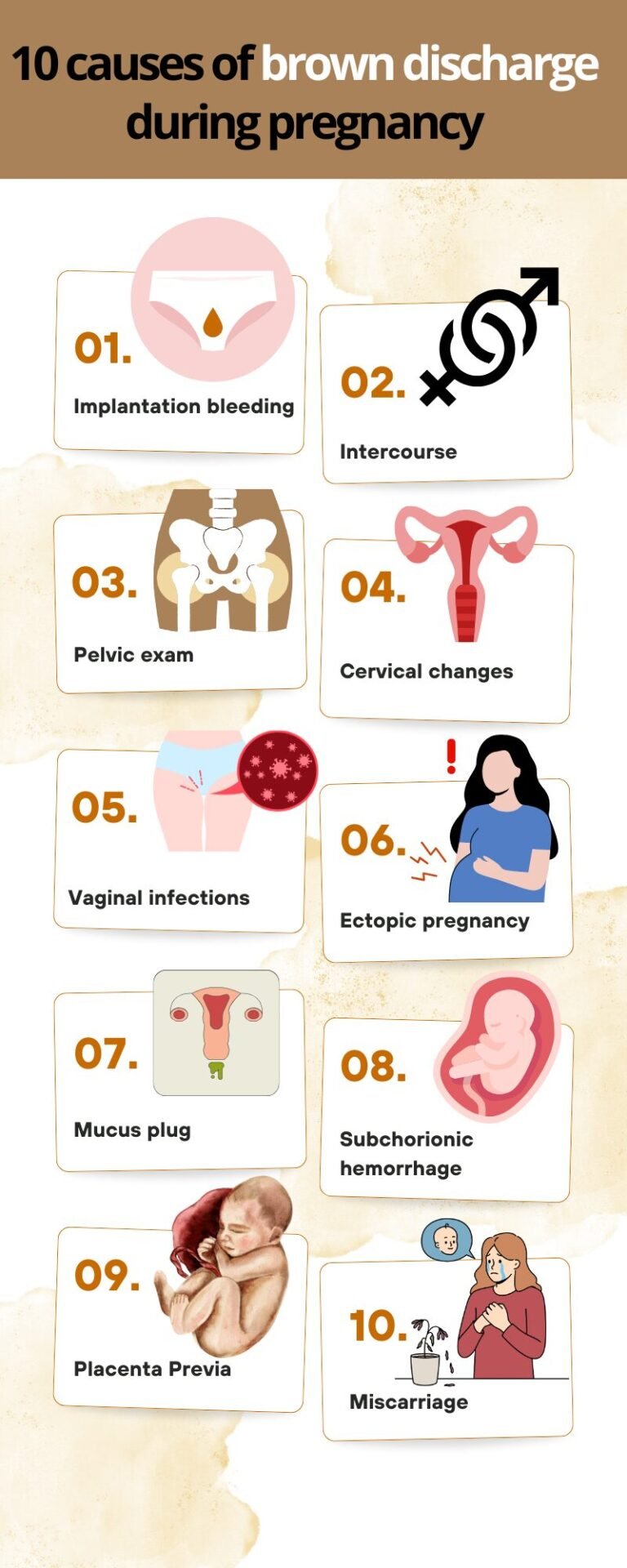
Brown vaginal discharge during pregnancy can be caused due to various reasons including:
1. Implantation bleeding
Implantation bleeding is one of the common causes of brown discharge while pregnant. Implantation is when the egg attaches itself to the uterine wall.
This occurs a few days after your ovulation. Implantation bleeding is usually harmless and is nothing to worry about.
Also read, “Is it normal to have brown spotting in pregnancy?”
2. Intercourse
For some mothers, having intercourse during pregnancy can cause light brown discharge or brown spotting.
This is because, during pregnancy, the vaginal region tends to become sensitive leading to mild spotting or bleeding.
Also read “Is it safe to have intercourse during pregnancy?”
3. Pelvic exam
Pelvic examination is another common cause for brown discharge during pregnancy.
Healthcare experts perform routine pelvic examinations on pregnant mothers to monitor the health of the mother and the baby.
A small amount of bleeding or spotting is common after a pelvic examination and it is usually nothing to worry about.
4. Cervical changes
Pregnancy is a time where a lot of changes occur in a pregnant mother’s body and changes in the cervical region is very common.
Due to factors such as hormonal changes, the cervix becomes sensitive leading to mild brown spotting during pregnancy.
Click Here to Read, A real case showing why cervical length scan is important in pregnancy.
5. Vaginal infections
Vaginal infections including bacterial vaginosis and gonorrhea can cause brown vaginal discharge during pregnancy.
It is important to consult with your gynecologist and take the prescribed medications and treatment to prevent further complications.
6. Ectopic pregnancy
Ectopic pregnancy is yet another reason that can cause reddish brown discharge.
An ectopic pregnancy is when the fertilised egg attaches outside the uterus, typically in one of the fallopian tubes.
Ectopic pregnancy requires immediate medical attention and treatment.
7. Mucus plug: Mucus plug is a thick layer of vaginal mucus that gets accumulated near the cervix protecting the uterus from infections.
In most cases, the mucus plug is excreted as a big glob covered with blood stains called bloody show, indicating labor. For others, it may be colorless too.
8. Subchorionic hemorrhage
Chronic membrane is the outermost layer of the amniotic sac. In some rare cases, blood can be formed in between the chorionic membrane and the wall of the uterus leading to spotting or bleeding. This is a concern that requires medical attention.
9. Placenta Previa
Placenta previa a serious pregnancy complication where the placenta grows in the lower part of the uterus covering the cervix.
Brown vaginal discharge is a common symptom of placenta previa and it requires medical attention.
10. Miscarriage
“Is brown discharge the start of a miscarriage?” In some cases, miscarriage could also be a cause of brown discharge. If the bleeding is heavy, it is important to contact your doctor immediately.
Brown Discharge Vs Other Types of Discharge
| Type of Discharge | Meaning | Should You Worry? |
|---|---|---|
| Brown | Old blood | Usually mild |
| White (milky) | Normal pregnancy discharge | Usually not a concern |
| Yellow / Green | Infection | Needs immediate medical attention |
| Bright Red | Active bleeding | Requires immediate medical attention |
| Mucus plug | Thick, jelly-like, sometimes brown | Normal occurrence before labour |
Brown Discharge Vs Implantation Bleeding
| Feature | Brown Discharge | Implantation Bleeding |
|---|---|---|
| Timing | Any trimester | 6–12 days after ovulation |
| Colour | Light to dark brown | Pink / light brown |
| Duration | A few hours–days | Less than 48 hours |
| Pain | Usually none | Mild cramps |
Should You Worry About Brown Discharge?
Although a small amount of brown discharge is usually harmless, it is important to consult your doctor if the bleeding is heavy or accompanied by symptoms such as abdominal pain or fever.
How to Reduce or Manage Brown Discharge?
You may not be able to stop brown discharge during pregnancy entirely, but these steps help:
- Get adequate rest
- Avoid intercourse temporarily
- Avoid heavy lifting or intense workouts
- Stay hydrated
- Seek medical care if it persists, becomes painful, or turns into red bleeding
Scans & Care at Jammi Scans, T. Nagar, Chennai
If you experience brown discharge, your doctor may recommend:
- Early Pregnancy Viability Scan
- Fetal Heartbeat Scan
- Transvaginal Scan (TVS)
- Subchorionic Hemorrhage Assessment
- Placental Location Scan
Book your scan at Jammi Scans to get clarity, expert guidance, and reassurance.
When to See a Doctor Immediately?
Consult your doctor immediately if you experience symptoms such as:
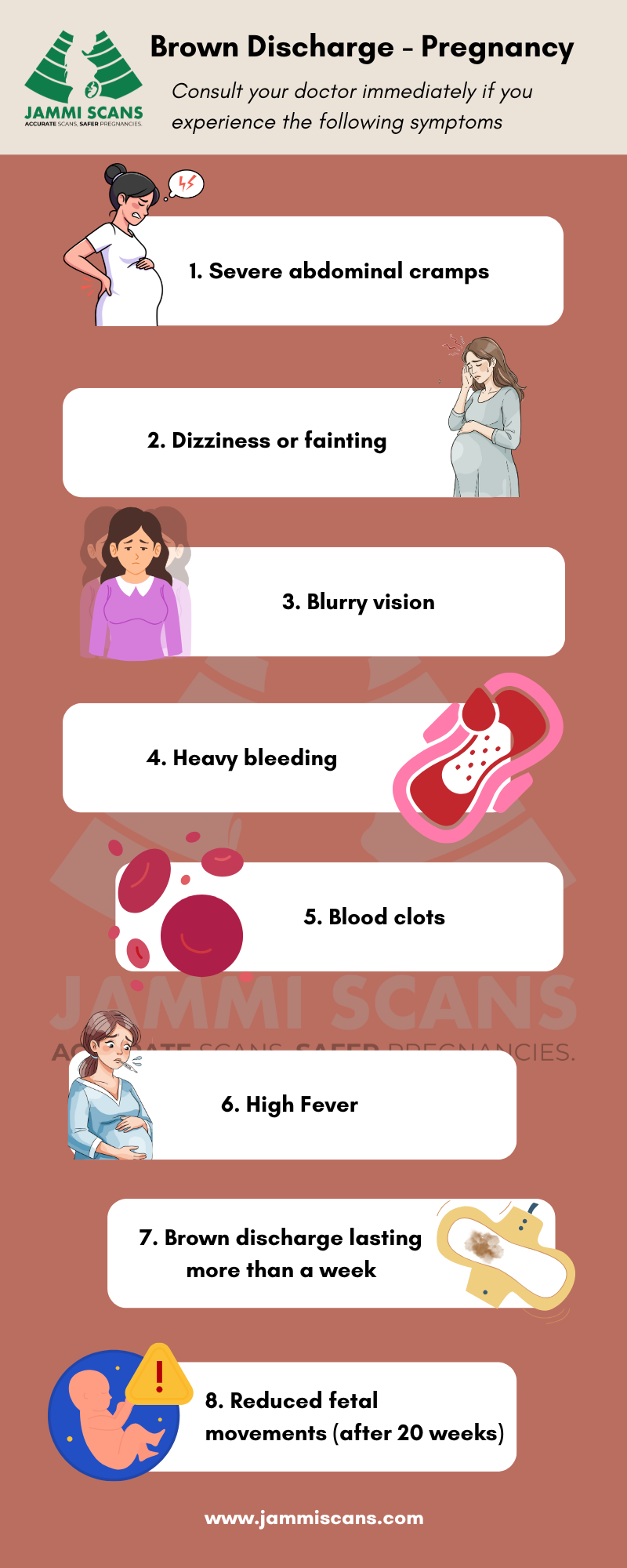
- Severe abdominal cramps
- Dizziness or fainting
- Blurry Vision
- Heavy bleeding
- Blood Clots
- High fever
- Brown discharge lasting >1 week
- Reduced fetal movements (after 20 weeks)
Conclusion
Brown discharge during pregnancy can be unsettling, but in most cases, it is normal. Still, knowing when to seek help is important.
If brown discharge occurs along with other concerning symptoms, contact your healthcare provider promptly.
At Jammi Scans, Dr. Deepthi Jammi is committed to caring for every mother with empathy and patience, ensuring your concerns are heard and every question is answered.
FAQ
1. Is brown discharge normal during pregnancy?
Yes in most cases, it is normal. But if it is accompanied by severe abdominal pain, fever, or bright red bleeding, contact your doctor immediately.
2. Why do I have brown discharge in early pregnancy?
Early pregnancy brings major hormonal and cervical changes.
Common reasons include:
- implantation bleeding
- old blood coming out
- cervical softening
- subchorionic hemorrhage
- spotting after sex, exercise, or a scan
Seek medical care if you have pain or fresh bleeding.
3. How long does brown discharge last during pregnancy?
Most cases last a few hours to 2–3 days.
If it continues beyond a week, becomes heavy, or has a foul smell, consult your doctor.

Reviewed by Dr. Deepthi Jammi - Fetal Medicine Specialist
Dr. Deepthi Jammi (Director, Jammi Scans) is a qualified OB/GYN and Post-Doc in Maternal Fetal Medicine. As a pregnancy ultrasound expert, she is passionate about healthy pregnancies and works towards spreading awareness on the latest diagnostic options available for parents to choose from. Dr.Deepthi has received gold medals and awards in Fetal Medicine at international and national conferences, and has appeared in numerous prestigious regional magazines and TV interviews.