
Table of Contents
ToggleVaginal Yeast Infection: Symptoms, Treatment, and Prevention
Summary
- Vaginal yeast infection is a common fungal infection caused by Candida.
- It commonly causes itching, white discharge, redness, and burning.
- Early treatment and good hygiene help prevent recurrence of vaginal yeast infection and complications.
Introduction
Vaginal yeast infection is a common health concern that many women experience.
Source: Link
You can maintain good vaginal health by understanding the symptoms of vaginal yeast infection. Know more about the causes, treatments, and preventive measures available.
What is Vaginal Yeast Infection?
A vaginal yeast infection is a fungal infection caused by the overgrowth of a yeast called Candida. This yeast is normally found in the vagina in small amounts.
The healthy bacteria, mainly the Lactobacillus species, in the vagina help keep yeast growth under control.
When there is a disturbance in the natural balance, yeast multiplies rapidly. This leads to infection. Vaginal yeast infection is also known as vaginal candidiasis. It can affect women of any age.
Research shows that it may occur more frequently during pregnancy or when immunity is low.
What Causes Vaginal Yeast Infection?
Below are some factors that can cause the overgrowth of yeast in the vagina.
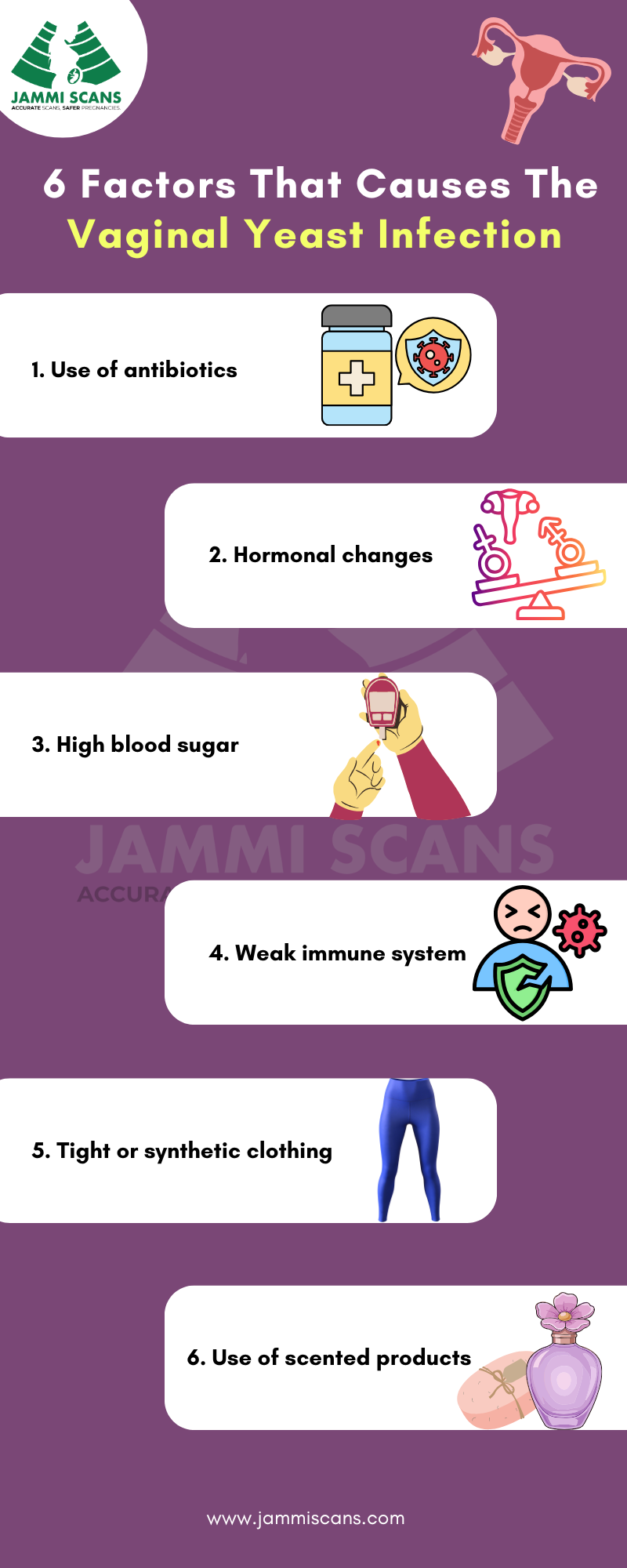
- Use of antibiotics: Antibiotics can kill good bacteria that help control yeast in the vagina.
- Hormonal changes: Changes during pregnancy, periods, or hormonal medicines can affect vaginal balance.
- High blood sugar: High or uncontrolled sugar levels help yeast grow faster.
- Weak immune system: When the body’s immunity is low due to illness or stress, infections can occur easily.
- Tight or synthetic clothing: Tight clothes and non-cotton underwear trap moisture and heat.
- Use of scented products: Scented soaps, vaginal washes, or douching can disturb natural vaginal balance.
These factors make it easier for yeast to multiply and cause infection.
Symptoms of Vaginal Yeast Infection
Symptoms can vary from mild to severe and may include:
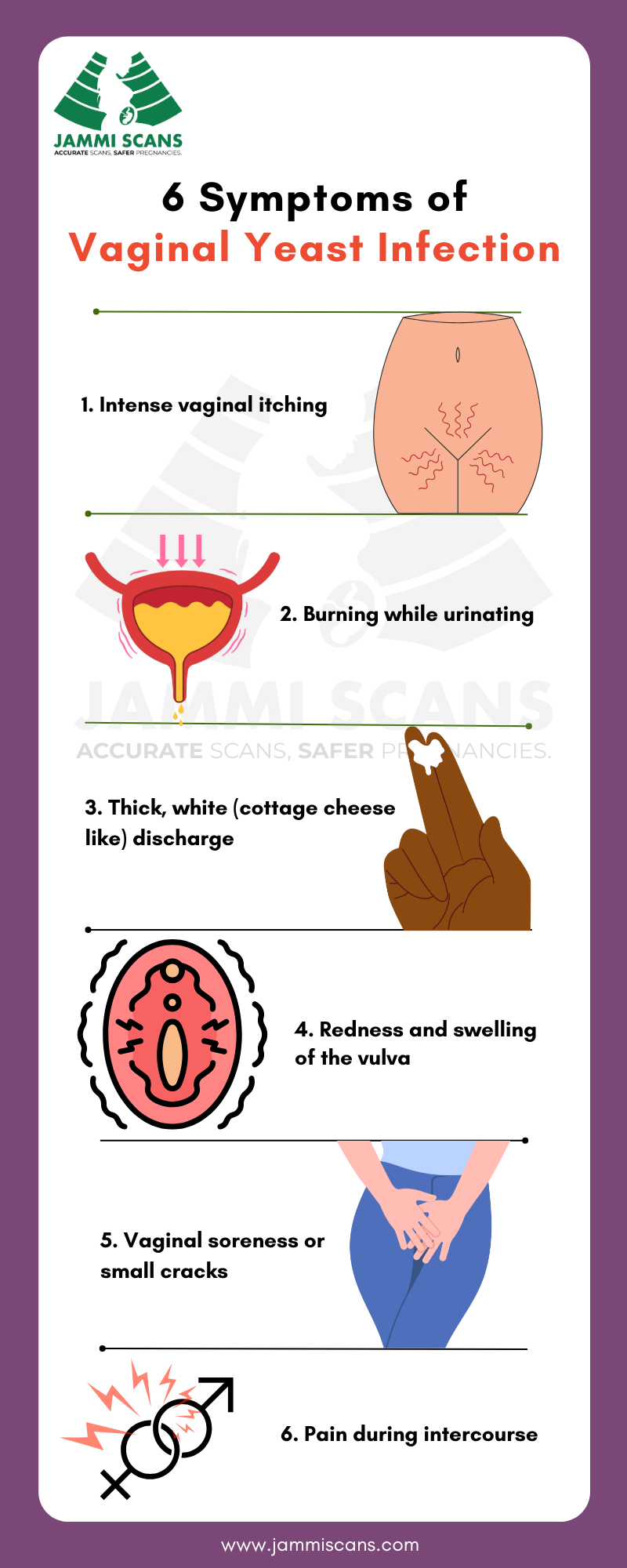
- Intense itching or irritation in and around the vagina and vulva
- Burning sensation while passing urine
- Thick, white vaginal discharge that looks like cottage cheese
- Redness and swelling of the vaginal area or vulva
- Vaginal soreness, small cracks in the vulva
- Pain or discomfort during intercourse
Vaginal Yeast Symptoms Checker
Tap on the symptom you are experiencing to know what it may indicate.Consult with your gynaecologist immediately if you experience any of the above symptoms.
How to Treat a Vaginal Yeast Infection?
Treatment for a vaginal yeast infection depends on the severity of symptoms and whether the infection is occurring for the first time or is recurrent.
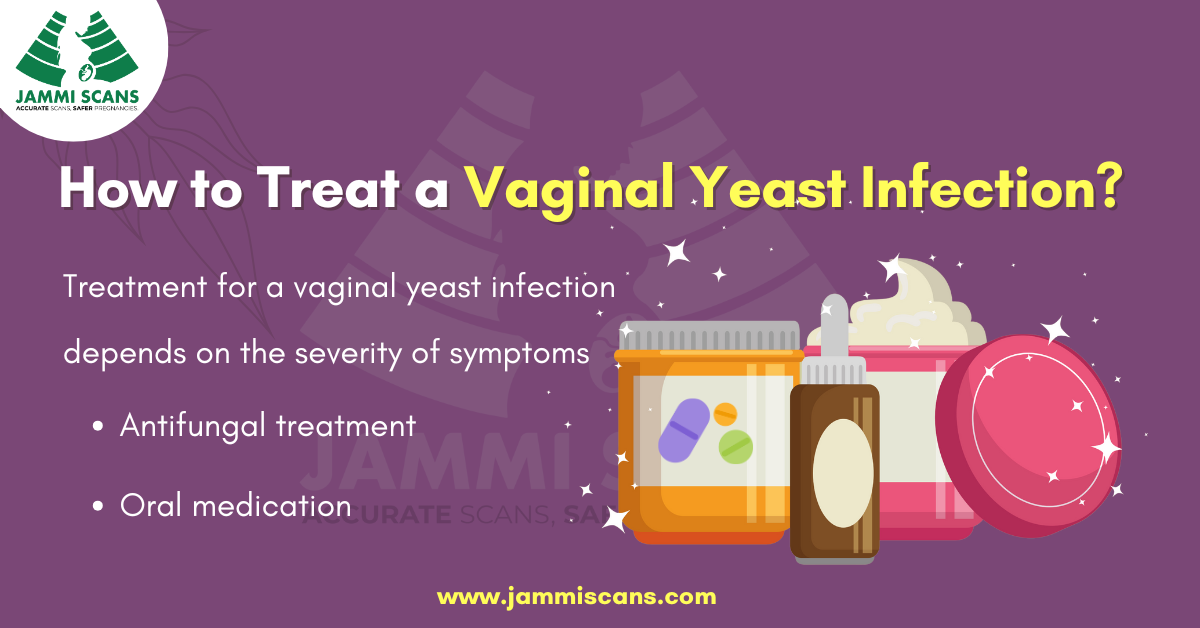
- Antifungal treatment: Most vaginal yeast infections are treated with antifungal medicines. These medicines are available as vaginal creams, tablets, or suppositories. These help reduce yeast growth and relieve symptoms such as itching and discharge.
- Oral medication: Doctors may prescribe medications to control the severity of the symptoms.
Can I Prevent Vaginal Yeast Infection?
Below are five habits that help you prevent vaginal yeast infection.
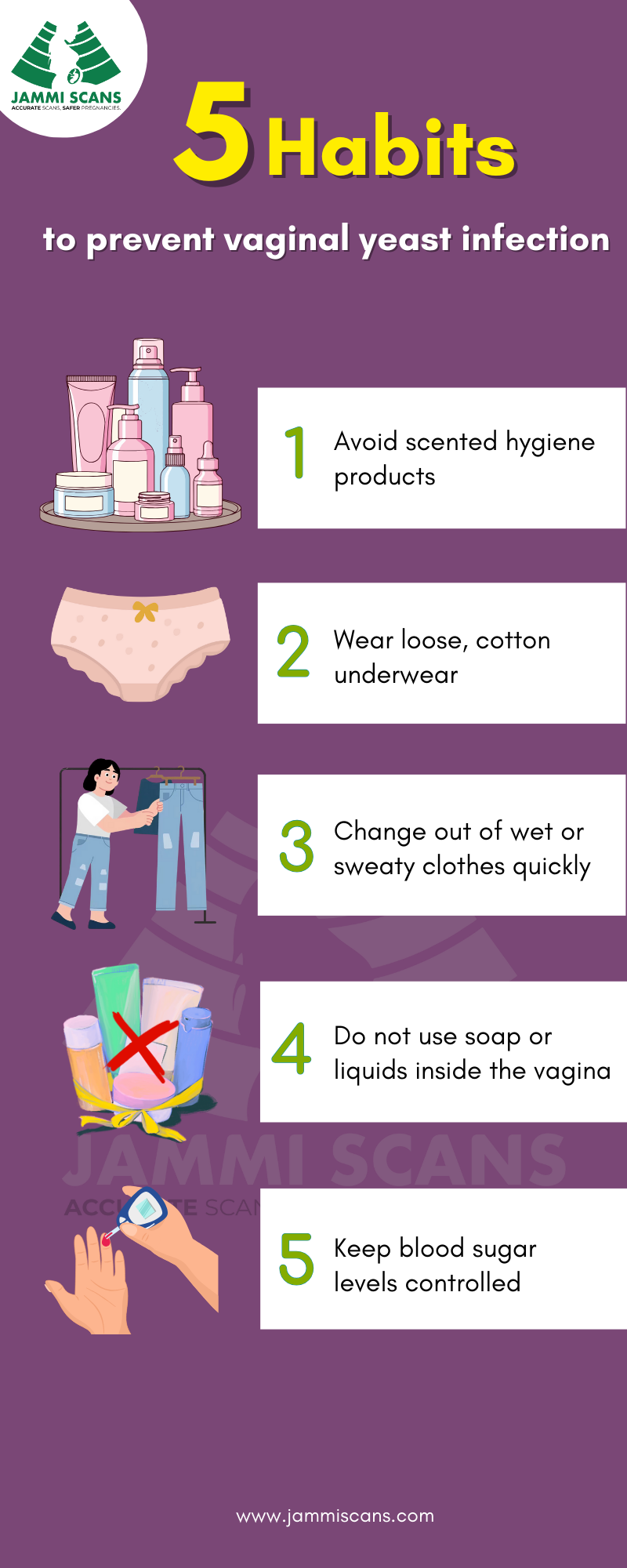
- Maintain good intimate hygiene and avoid scented intimate hygiene products.
- Always wear loose-fitting clothes and cotton underwear.
- Avoid staying in wet swimsuits or sweaty gym clothes for long periods.
- Avoid washing the inside of the vagina with water or soap. The vagina is naturally self-cleaning, and you don’t need to do anything extra to keep the inside clean.
- If diabetic, keep blood sugar levels under control
When to Consult a Doctor for a Vaginal Yeast Infection?
You should consult a doctor if:
- Your symptoms are severe, such as severe itching, irritation, or bleeding
- Your symptoms do not improve even after a few days of treatment.
- You experience a recurrence (relapse) of the infection
Conclusion
Vaginal yeast infection is a common fungal infection. To prevent this, you must maintain good hygiene and follow healthy lifestyle practices.
You must consult a doctor. With early diagnosis and correct treatment, vaginal yeast infections can be cured.
Frequently Asked Questions
1. What is the Best Diet for a Yeast Infection?
You must take a healthy, balanced diet during the recovery. Include probiotic-rich foods like
- Curd
- Buttermilk
- Greek Yogurt
Make sure to reduce sugar, refined carbohydrates, and drink plenty of water. These steps help restore healthy bacteria in the body naturally.
2. Which Vitamin Deficiency Causes Yeast Infection?
Deficiency of vitamins such as vitamin D and zinc may weaken immunity. So, it makes you more prone to infections, including vaginal yeast infections.
3. Can Sex Cause a Vaginal Yeast Infection?
Vaginal yeast infection is not a sexually transmitted infection. But sexual activity can sometimes trigger symptoms due to the changes in the vaginal environment.
Reviewed by Dr. Deepthi Jammi - Fetal Medicine Specialist
Dr. Deepthi Jammi (Director, Jammi Scans) is a qualified OB/GYN and Post-Doc in Maternal Fetal Medicine. As a pregnancy ultrasound expert, she is passionate about healthy pregnancies and works towards spreading awareness on the latest diagnostic options available for parents to choose from. Dr.Deepthi has received gold medals and awards in Fetal Medicine at international and national conferences, and has appeared in numerous prestigious regional magazines and TV interviews.