
Table of Contents
ToggleSummary
- An abnormal anomaly scan report can range from minor findings to more serious conditions.
- Common findings include soft markers, structural abnormalities, and organ-related concerns.
- Follow-up scans or fetal medicine specialist referrals are typically the next steps to get a clearer picture.
Introduction
The anomaly scan, done between 18–22 weeks of pregnancy, is a detailed ultrasound that examines your baby’s major structures from head to toe.
While most scans return reassuring results, some may flag a concern, leaving parents overwhelmed with questions.
An anomaly scan abnormal report does not automatically mean a serious condition.
Understanding what the report means, what follow-up steps will look like, and how to navigate this with the right medical support can make a meaningful difference.
Schedule an Anomaly Scan with Dr. Deepthi Jammi Today
What Does an Abnormal Anomaly Scan Report Show?
An abnormal report from an anomaly scan means the doctor has observed something on the scan that is outside the expected range of development. This could be:
- A structural difference in one of the baby’s organs
- A variation in the amount of amniotic fluid
- A soft marker that may or may not have clinical significance
- A finding that requires further investigation to confirm
Abnormal findings vary in severity, while some may be incidental or require monitoring, others can indicate conditions that need prompt medical attention.
What Types of Findings Are Commonly Seen?
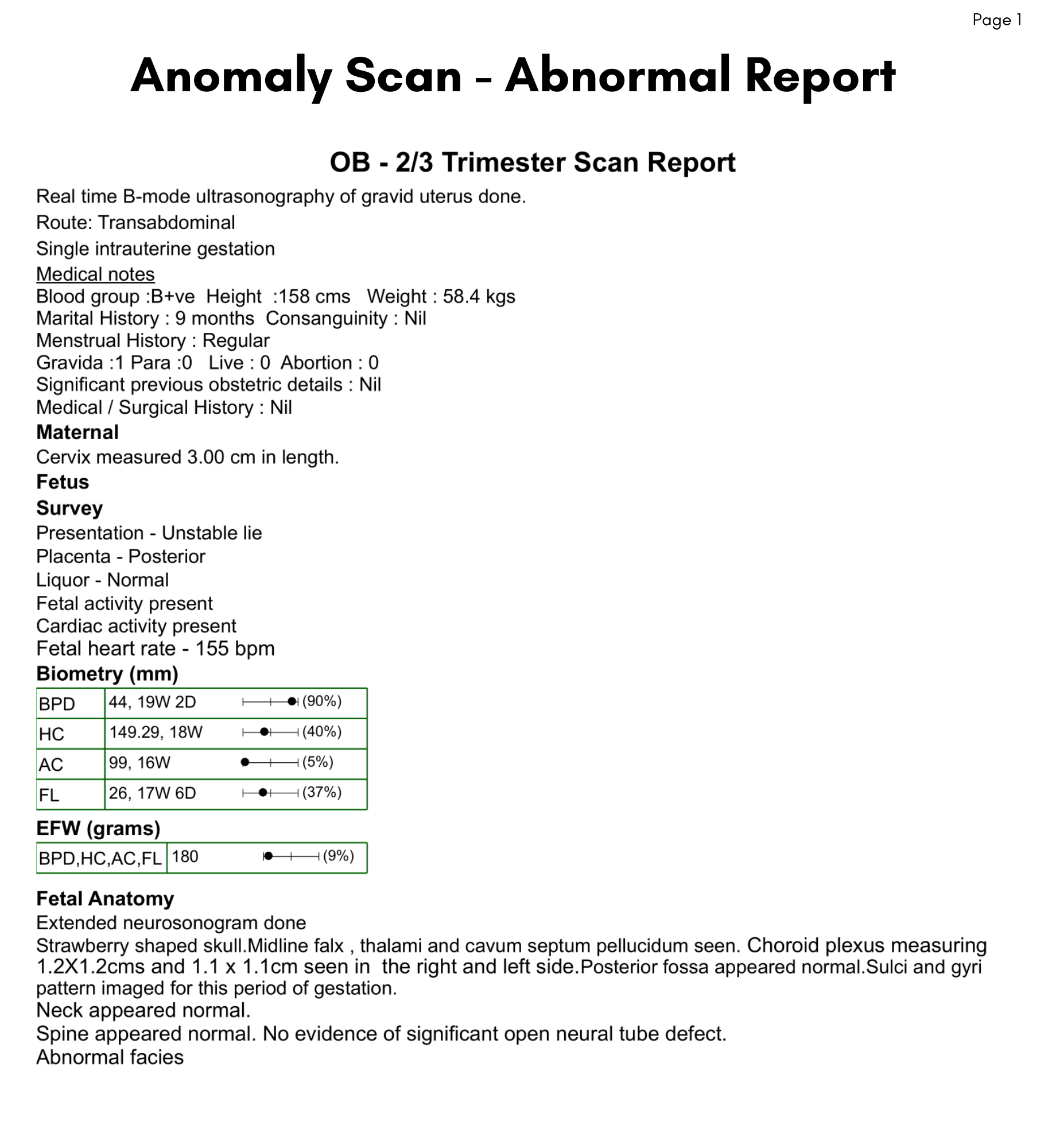
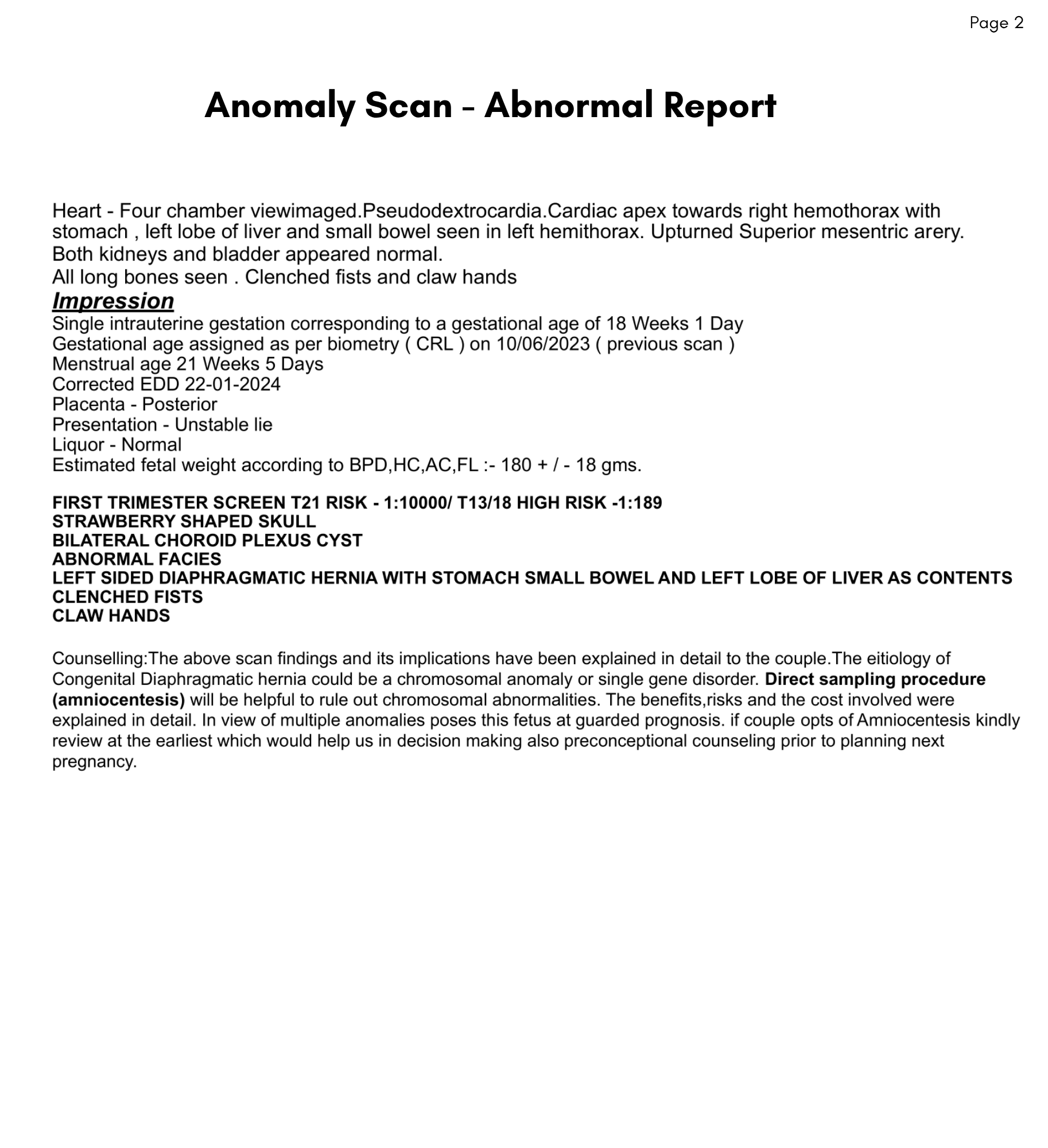
There can be a range of findings in an anomaly scan abnormal report. Some of the most frequently noted abnormalities are:
- Choroid plexus cysts (CPCs) – Fluid-filled spaces in the brain that often resolve by 28 weeks
- Echogenic bowel – The bowel appears brighter than expected, which may require additional testing
- Echogenic foci– Bright spots seen in the heart may be noted as a soft marker for further evaluation
- Mild renal pelvic dilatation – Slight widening of the kidney’s collecting system
- Cardiac anomalies – Including ventricular septal defects or unusual heart rhythms
- Neural tube defects – Such as spina bifida, involving the spine or brain
- Cleft lip or palate – Detectable with a skilled sonographer and good imaging quality
- Short long bones – May indicate skeletal dysplasia or simply a constitutional variation
Does an Abnormal Report Always Mean Something Serious?
No. An anomaly scan abnormal report does not always mean something serious or life-threatening. Many findings are often “soft markers”, subtle variations that are genetic in nature and can be seen in healthy babies as well.
However, it is important to have a discussion with your fetal medicine specialist to understand what the finding means, whether additional tests are needed, and what the next steps should be.
What Happens After an Abnormal Anomaly Scan?
The next steps typically include:
- A referral to a fetal medicine unit for a detailed anomaly scan
- Interventional procedures such as Amniocentesis or Chorionic Villus Sampling (CVS), if a chromosomal condition is suspected
- Fetal echocardiography for suspected heart abnormalities
- A repeat scan in a few weeks to check if the finding has resolved or progressed
How Should Parents Respond to an Abnormal Report?
It is completely normal to feel anxious after receiving an anomaly scan abnormal report. Here are some steps parents can follow after the report:
- Ask your doctor to explain the finding clearly
- Request a referral to a fetal medicine specialist if needed
- Avoid self-diagnosing based on internet searches
- Seek emotional support from trusted family, friends, or counsellors
- Keep all follow-up appointments
Why Accurate Scanning Matters?
The quality of an anomaly scan is directly tied to the equipment used and the expertise of the doctor. An accurate scan:
- Reduces the likelihood of false positives or missed findings
- Ensures that findings are correctly characterised and reported
- Provides a reliable basis for further clinical decisions
- Offers parents a clearer picture, reducing unnecessary anxiety
Why is it Important to choose the Right Pregnancy Scan Centre in Chennai?
- Certified fetal medicine specialists with dedicated obstetric ultrasound experience
- Advanced, well-maintained imaging equipment capable of high-resolution fetal views
- A patient-centred approach that allows time for explanation and questions
- Transparent reporting and prompt follow-up support
- A track record of accurate and timely reporting
At Jammi Scans, Dr. Deepthi Jammi combines advanced imaging technology with personalised care.
Conclusion
An anomaly scan abnormal report is daunting, but it is important to remember that it is just the initial screening, not a verdict.
With the right specialist support, accurate follow-up, and a calm approach, many families navigate this phase peacefully and go on to have healthy pregnancies.
The important thing is to get into the right hands from the start. Contact Dr. Deepthi Jammi at Jammi Scans, one of the most renowned pregnancy scanning specialists in Chennai, to give yourself and your baby the best care possible. Call 7338771733 to book your scan today.
FAQ
1. Can an abnormal Anomaly Scan Report be wrong?
While an anomaly scan is highly useful in detecting possible concerns, it is still a screening tool and not a definitive diagnostic test, and findings can sometimes be false positives.
2. Will I need a second opinion after an abnormal report?
In most cases, yes. An abnormal anomaly scan report is typically referred to a fetal medicine specialist for a detailed evaluation. A specialist’s assessment is important to confirm findings, understand their significance, and plan the right course of care.
3. Can the baby’s position affect anomaly scan results?
When the baby is not in the right position, some anatomical features may not be visible clearly, resulting in an incomplete scan.
4. Do all abnormal findings require treatment?
Not all findings require immediate treatment. Some may need monitoring throughout the pregnancy, while others may require specialist care or medical intervention either while the baby is still in the womb or after birth. Your fetal medicine specialist will guide you based on your specific findings.
5. Can abnormalities disappear in later scans?
Yes, in some cases. Certain soft markers, such as choroid plexus cysts or mild renal pelvis dilatation, commonly resolve on their own as the pregnancy progresses. This is one reason why doctors often recommend follow-up scans rather than immediate intervention.
6. How accurate are abnormal anomaly scan findings?
This depends on the type of ultrasound equipment used, the experience of the doctor carrying out the scan, and the gestational age of the baby at the time of the scan.
7. Are all abnormalities found on a 20-week scan?
Not necessarily. While the 20-week anomaly scan is extensive, some defects may only be detected in later scans or in the later stages of pregnancy.
8. How common is bad news at an anomaly scan?
Serious structural problems are found in approximately 2 to 3 out of every 100 anomaly scans. Soft markers requiring further investigation are also seen, though many of these turn out to have positive outcomes with the right care.

Reviewed by Dr. Deepthi Jammi - Fetal Medicine Specialist
Dr. Deepthi Jammi (Director, Jammi Scans) is a qualified OB/GYN and Post-Doc in Maternal Fetal Medicine. As a pregnancy ultrasound expert, she is passionate about healthy pregnancies and works towards spreading awareness on the latest diagnostic options available for parents to choose from. Dr.Deepthi has received gold medals and awards in Fetal Medicine at international and national conferences, and has appeared in numerous prestigious regional magazines and TV interviews.