

Table of Contents
ToggleSummary
- Placenta previa is a condition that affects approximately 1 in 200 pregnant women.
- In this condition, the placenta is positioned low in the uterus and partially or completely covers the cervix.
- It requires regular monitoring and, in some cases, medication—especially if bleeding is present.
What is Placenta Previa?
Placenta is a temporary organ that develops during pregnancy inside the mother’s womb. It provides nutrition and oxygen to the fetus through the umbilical cord.
Placenta – Normal Position

Placenta previa is a pregnancy condition where the placenta lies low in the uterus and partially or completely covers the cervix (the opening of the uterus).
The cervix is the passage through which the baby is delivered during a vaginal birth.
When the placenta covers this opening, it can block the baby’s exit and may lead to severe bleeding, especially in the second or third trimester of pregnancy.
Schedule an Appointment with Dr. Deepthi Jammi Today
Types of Placenta Previa
Placenta previa is classified based on how much of the cervix is covered:
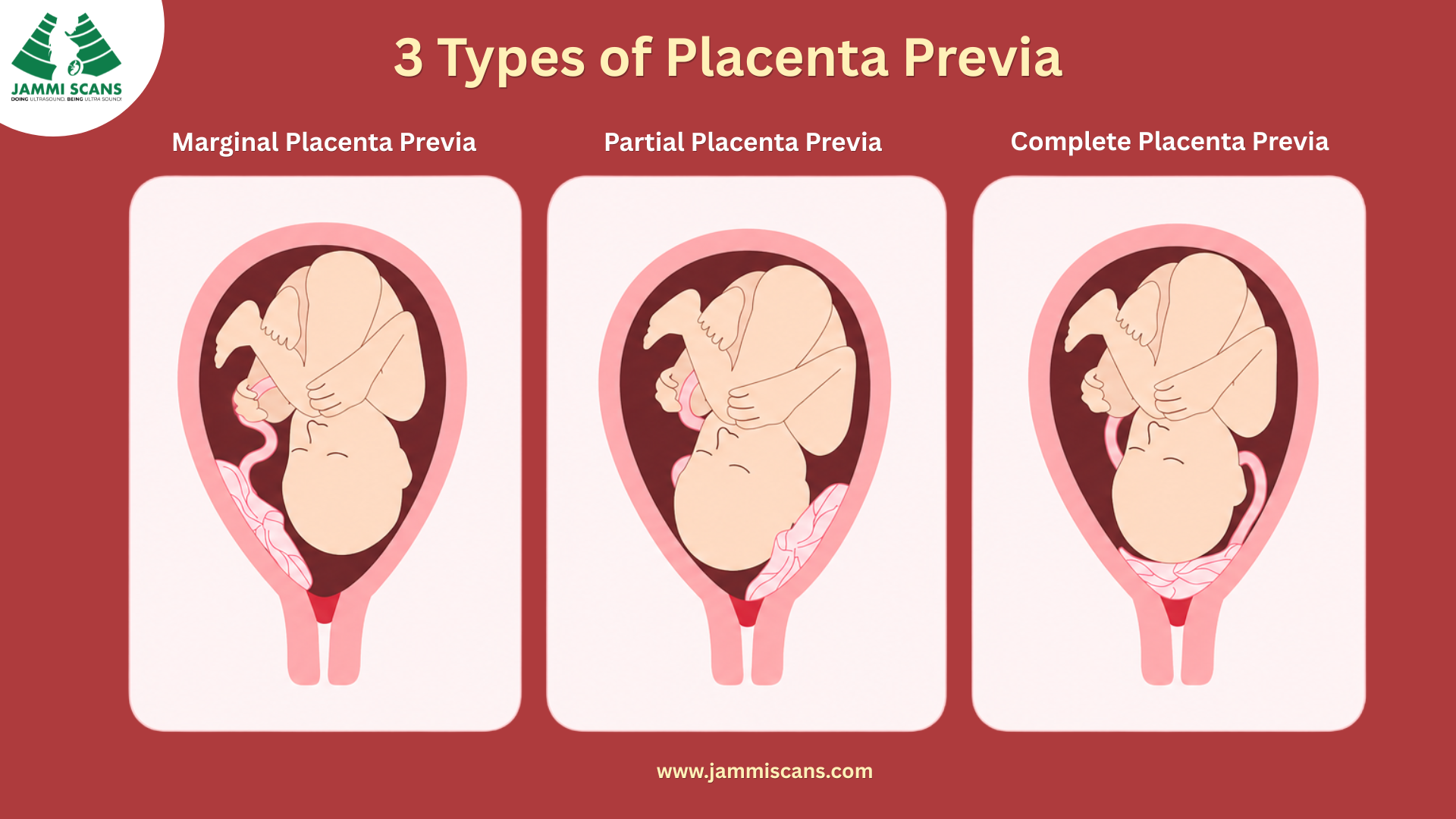
- Type 1 (Marginal): Placenta reaches the edge of the cervix
- Type 2 (Partial): Placenta partially covers the cervix
- Type 3 (Complete): Placenta completely covers the cervix
Symptoms of Placenta Previa
Symptoms of placenta previa include:
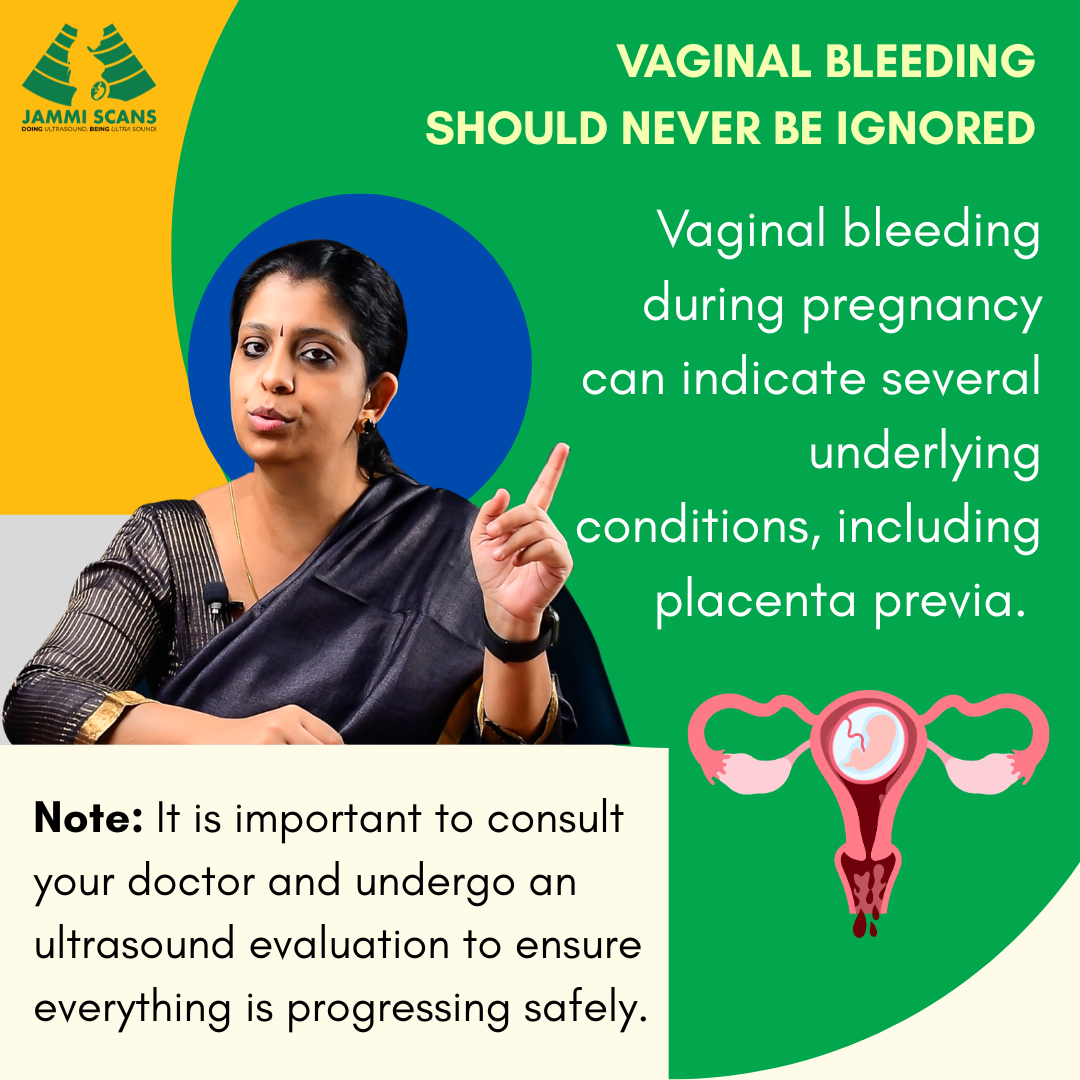
- Painless vaginal bleeding in the second or third trimester
- Mild to moderate abdominal cramps
Dr. Deepthi Jammi Says:
What Causes Placenta Previa?
While the exact cause of placenta previa is not known, several risk factors are associated with it, including:
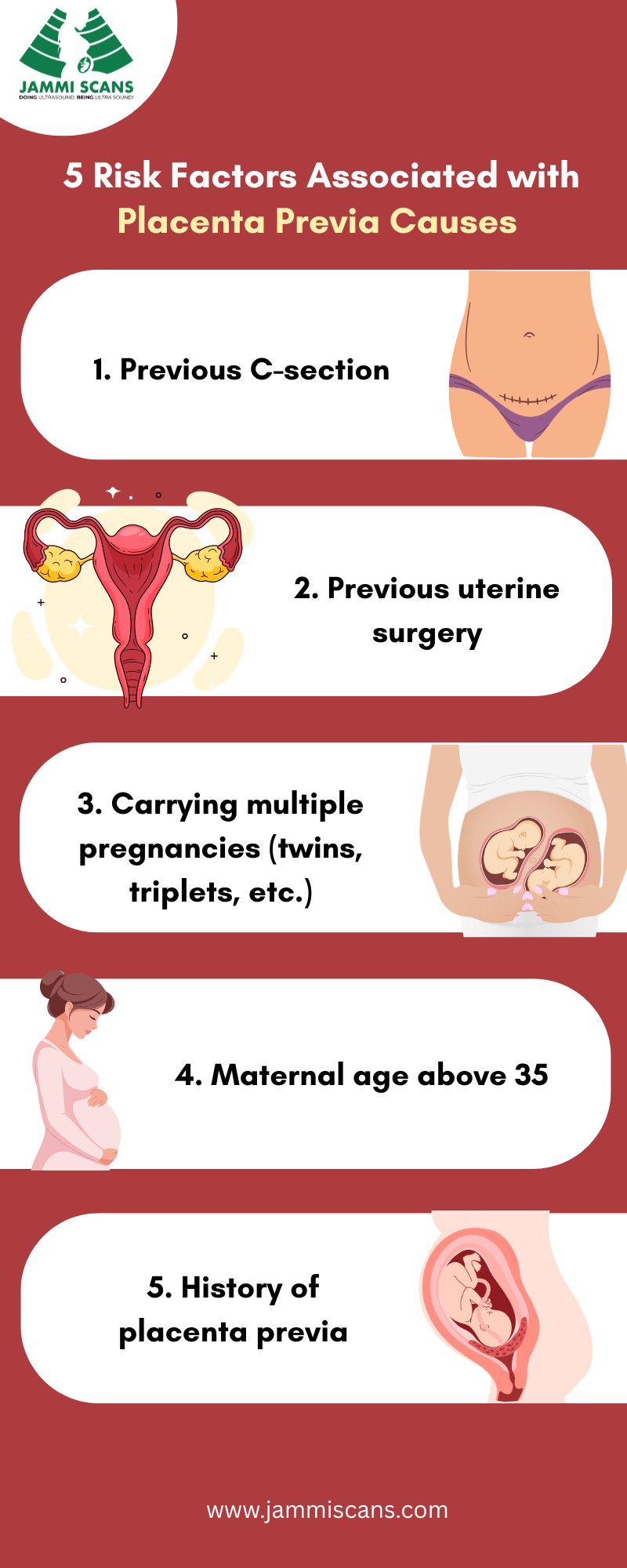
- Previous C-section
- Previous uterine surgery
- Carrying multiple pregnancies (twins, triplets, etc.)
- Maternal age over 35
- History of placenta previa
How is Placenta Previa Diagnosed?
Placenta previa is usually diagnosed during the routine anomaly scan, typically performed between 18–22 weeks of pregnancy.
During an anomaly scan, apart from checking the baby’s structures, doctors also assess the placental location.
If the placenta is lying low in the uterus near the cervix, it is called a low-lying placenta. If the placenta partially or completely covers the cervix, it is diagnosed as placenta previa.
Can Placenta Previa Resolve on Its Own?
Around 85–90% of low-lying or marginal placentas resolve naturally by the third trimester.
However, complete placenta previa (where the placenta fully covers the cervix) is less likely to resolve and requires close monitoring.
Is Placenta Previa Dangerous?
Placenta previa can lead to complications if not carefully monitored.
For the mother:
- Heavy bleeding
- Need for early or planned delivery
For the baby:
However, with close monitoring and regular ultrasound scans, there are high chances of a safe and healthy outcome for both the mother and the baby.
Placenta Previa – Treatment & Management
The treatment and management of placenta previa depend on the severity of the condition and may vary from case to case.
However, common management approaches include:
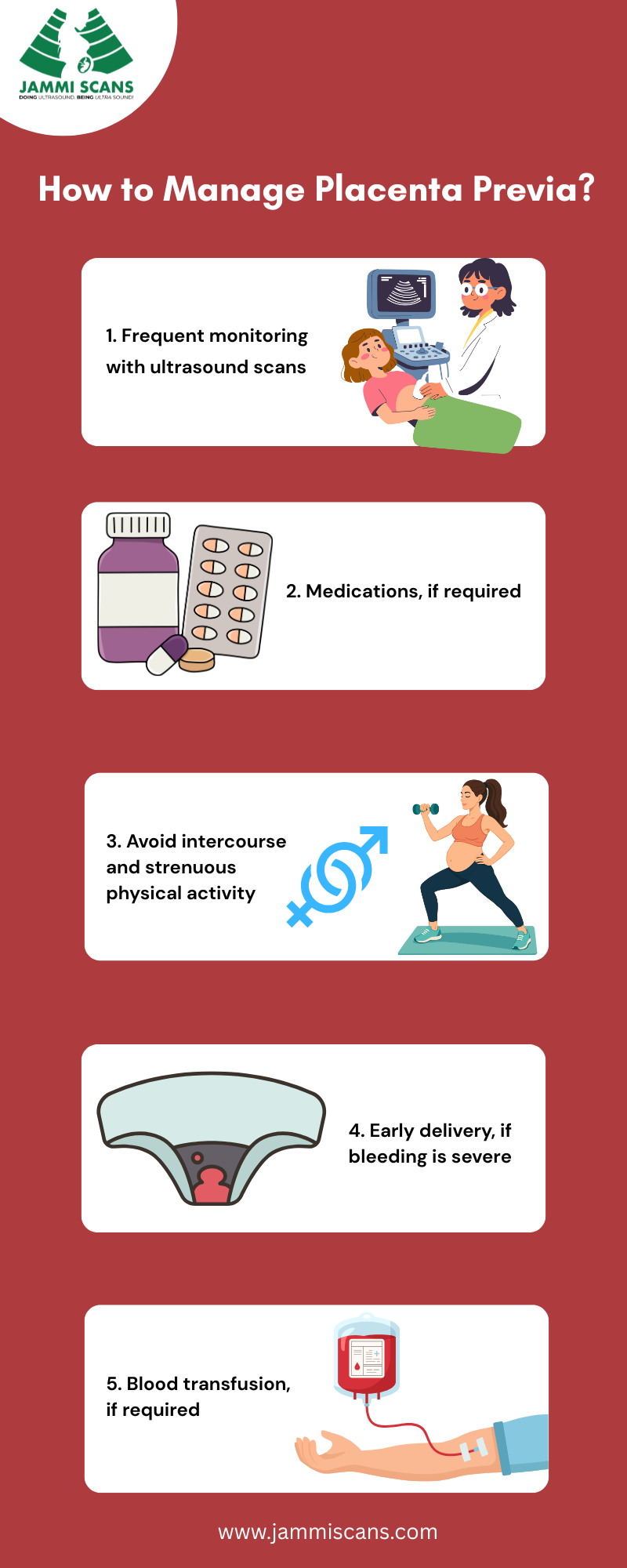
- Frequent monitoring with ultrasound scans
- Medications, if required
- Activity restriction, including avoiding intercourse and strenuous physical activity
- Early delivery, if bleeding is severe
- Blood transfusion, if required
When Should You See a Doctor for Placenta Previa?
It is crucial to seek medical care immediately if you have:
- Vaginal bleeding with or without pain
- Pelvic pain
- Contractions or cramp-like pain
Why Choose Jammi Scans for Placenta Previa?
Placenta previa is a condition that requires regular monitoring and expert evaluation to ensure the well-being of both the mother and the baby.
At Jammi Scans, every pregnancy is carefully monitored by Dr. Deepthi Jammi, an FMF-certified fetal medicine specialist with expertise in managing high-risk pregnancies.
We follow standard protocols to assess placental position through detailed ultrasound scans and provide timely guidance for safe pregnancy outcomes.
Dr. Deepthi Jammi personally counsels every patient and explains their condition clearly, ensuring they feel informed and reassured.
Frequently Asked Questions
1. Can placenta previa go away?
Yes, in many cases, especially when the placenta covers the cervix partially or is low-lying (marginal), it may move upward as the pregnancy progresses.
However, when the placenta completely covers the cervix (complete placenta previa), the chances of it moving upward are comparatively low and require close monitoring.
2. Can I have a normal delivery?
Yes, you may have a normal vaginal delivery if the placenta moves upward and no longer covers or lies too close to the cervix.
However, if the placenta partially or completely covers the cervix (placenta previa), the chances of vaginal delivery are very low, and a C-section is usually recommended for safety.
The mode of delivery is not determined by placental position alone. It also depends on other factors such as the baby’s health, the mother’s pelvic adequacy, and any associated pregnancy complications.
3. Can I travel with placenta previa?
Travel is generally advised to be limited, especially unnecessary travel, if you have placenta previa. The decision depends on the severity of the condition.
Travel is usually restricted if there is bleeding and should only be undertaken after consulting your doctor.
Reviewed by Dr. Deepthi Jammi - Fetal Medicine Specialist
Dr. Deepthi Jammi (Director, Jammi Scans) is a qualified OB/GYN and Post-Doc in Maternal Fetal Medicine. As a pregnancy ultrasound expert, she is passionate about healthy pregnancies and works towards spreading awareness on the latest diagnostic options available for parents to choose from. Dr.Deepthi has received gold medals and awards in Fetal Medicine at international and national conferences, and has appeared in numerous prestigious regional magazines and TV interviews.