Table of Contents
ToggleSummary
Medically Reviewed by Dr. Deepthi Jammi, MS (OB/GYN), Fetal Medicine Specialist – 15+ Years Experience
- An anomaly scan is a key prenatal test that identifies many structural abnormalities, but it cannot detect all conditions.
- Genetic disorders, functional issues, and subtle or late-developing abnormalities may go unnoticed due to technical and biological limitations.
Introduction
- An anomaly scan is one of the most detailed ultrasound examinations, typically performed between 18 and 22 weeks of pregnancy. It evaluates the baby’s physical development and detects many structural abnormalities.
- Despite major advancements in ultrasound technology, not all abnormalities can be detected during the scan. A study shows that ultrasound detects only about 50–70% of major congenital anomalies.
Schedule an Anomaly Scan with Dr. Deepthi Jammi Today
What Cannot Be Detected in an Anomaly Scan?
Since this scan is usually done around the 5th month of pregnancy, there are several things it cannot detect, such as:
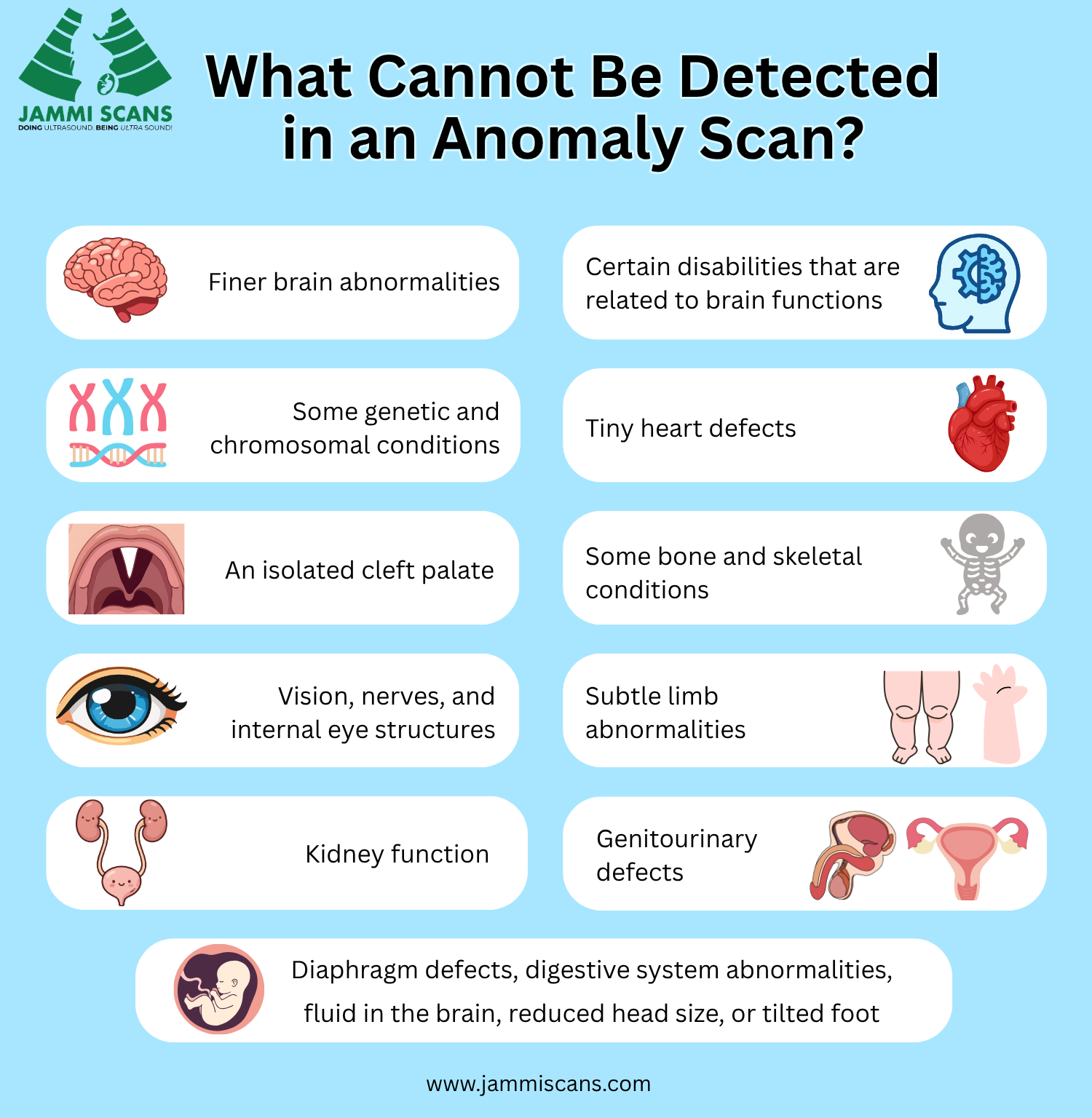
- Finer brain abnormalities, as white and grey matter form only in the 7th or 8th month.
- IQ, autism, cerebral palsy, and learning disabilities, as they are related to brain function, not structure.
- Genetic and chromosomal conditions, unless they show visible physical signs. Additional tests are needed to confirm.
- Tiny heart defects, such as small holes less than 5 mm.
- An isolated cleft palate may be missed.
- Some bone and skeletal conditions, especially when they are mild.
- Vision, nerves, and internal eye structures.
- Subtle limb abnormalities.
- Organs like the kidneys can be seen structurally, but their function can only be evaluated later in pregnancy.
- Genitourinary defects may not be clearly visible at this stage.
- Conditions that develop later in pregnancy, such as diaphragm defects, digestive system abnormalities, fluid in the brain, reduced head size, or tilted foot
Why Doesn’t the Anomaly Scan Detect Everything?
There are several reasons why an anomaly scan cannot detect all conditions:
1. The scanning is done using sound waves, which are greatly affected by factors like
- the baby’s position,
- low fluid,
- the mother’s BMI.
2. It is done around 18–22 weeks, so if a condition develops later in pregnancy, it will not be seen at this stage.
3. It assesses structural defects, not functional defects. So, problems related to organ function or metabolism cannot be detected.
4. Very small or mild abnormalities may not be visible in the scan.
5. The accuracy of the scan depends on expertise and equipment. In specialised centres with advanced equipment and experienced fetal medicine specialists, detection rates are higher.
6. Some conditions are easier to detect than others. For example, the detection rate for abdominal wall defects is around 90%, whereas for digestive system issues it’s only 33%.
Does This Mean the Anomaly Scan is Not Reliable?
Not at all.
Even with its limitations, the anomaly scan remains one of the most important scans during pregnancy.
It plays a major role in detecting serious structural abnormalities. This helps doctors plan pregnancy care more effectively and supports informed decision-making.
When are Additional Tests Needed After an Anomaly Scan?
Additional tests may be recommended when:
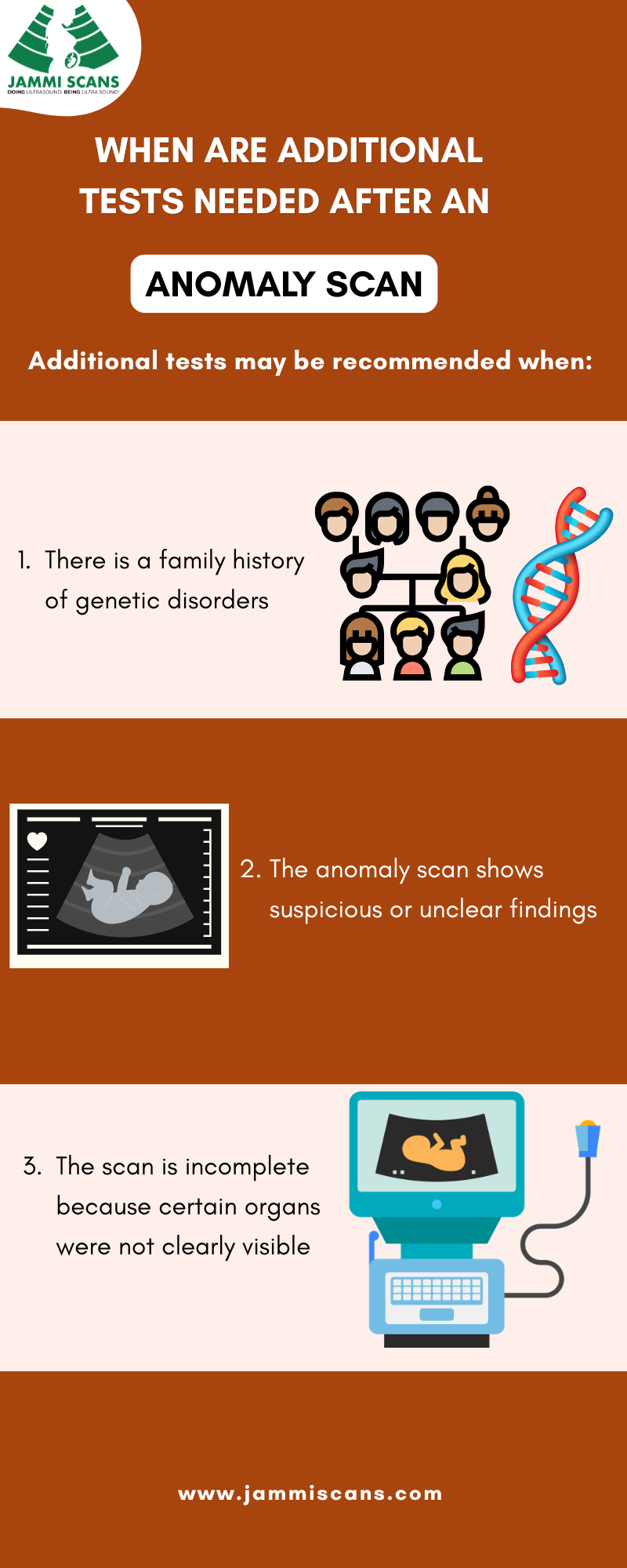
- There is a family history of genetic disorders
- The anomaly scan shows suspicious or unclear findings
- The scan is incomplete due to poor visibility
Your doctor may recommend the following tests to get deeper insights:
While many parents worry about what cannot be detected in an anomaly scan, it is equally important to focus on what the scan can detect.
It detects many major structural abnormalities and supports better pregnancy management.
Though it cannot detect every condition, it still provides valuable information about your baby’s development and overall well-being.
So, make sure you do not skip this important scan during your pregnancy.
FAQ
1. Can an anomaly scan detect genetic disorders?
No, it cannot directly detect genetic disorders because it mainly checks the baby’s physical structure. But if it shows certain abnormalities associated with genetic conditions, doctors may recommend NIPT or amniocentesis for confirmation.
2. Can an anomaly scan miss birth defects?
Yes, an anomaly scan can sometimes miss birth defects. Though it can detect many major abnormalities, certain smaller defects or conditions that develop later in pregnancy may not be visible.
3. Can an anomaly scan detect autism or brain function issues?
No, because it only shows how the baby’s brain is formed, not how it will function after birth. Conditions like autism are related to brain activity and development over time, which cannot be seen on a scan.
4. Why do doctors recommend additional tests after an anomaly scan?
Doctors may recommend additional tests if the scan findings are unclear, if earlier screenings show a higher risk, or if they need more detailed information about genetic or functional conditions.
Reviewed by Dr. Deepthi Jammi - Fetal Medicine Specialist
Dr. Deepthi Jammi (Director, Jammi Scans) is a qualified OB/GYN and Post-Doc in Maternal Fetal Medicine. As a pregnancy ultrasound expert, she is passionate about healthy pregnancies and works towards spreading awareness on the latest diagnostic options available for parents to choose from. Dr.Deepthi has received gold medals and awards in Fetal Medicine at international and national conferences, and has appeared in numerous prestigious regional magazines and TV interviews.