
Table of Contents
ToggleSummary
Medically Reviewed by Dr. Deepthi Jammi (MS – OB/GYN – Fetal Medicine Specialist)
- An anomaly scan procedure is a non-invasive and painless ultrasound scan.
- You may feel mild discomfort during the procedure, which is completely normal.
- The scan is absolutely safe and important for checking your baby’s growth and development.
Introduction
An anomaly scan is one of the most important scans taken between the 18-22 weeks of pregnancy. It helps doctors closely check how your baby is growing and developing.
But many expecting mothers have some common concerns:
How is an anomaly scan done? Is it a painful procedure?
Let’s find out.
Schedule an Anomaly Scan with Dr. Deepthi Jammi Today
Is Anomaly Scan Procedure Painful?
No, the anomaly scan procedure is not painful.
It does not involve injections, instead, it uses sound waves to create images of your baby.
During the scan, a little pressure is applied to your abdomen to get clear images of the baby’s organs. This might feel slightly uncomfortable for a short time. But it should not cause pain.
In some situations, especially if the baby’s position is not ideal, a transvaginal scan may be suggested to get clearer pictures.
This involves inserting a small probe inside the vagina, which might feel a little uncomfortable. But it’s usually not painful.
What Does an Anomaly Scan Feel Like?
If you’re wondering what happens during an anomaly scan, the process is quite simple.
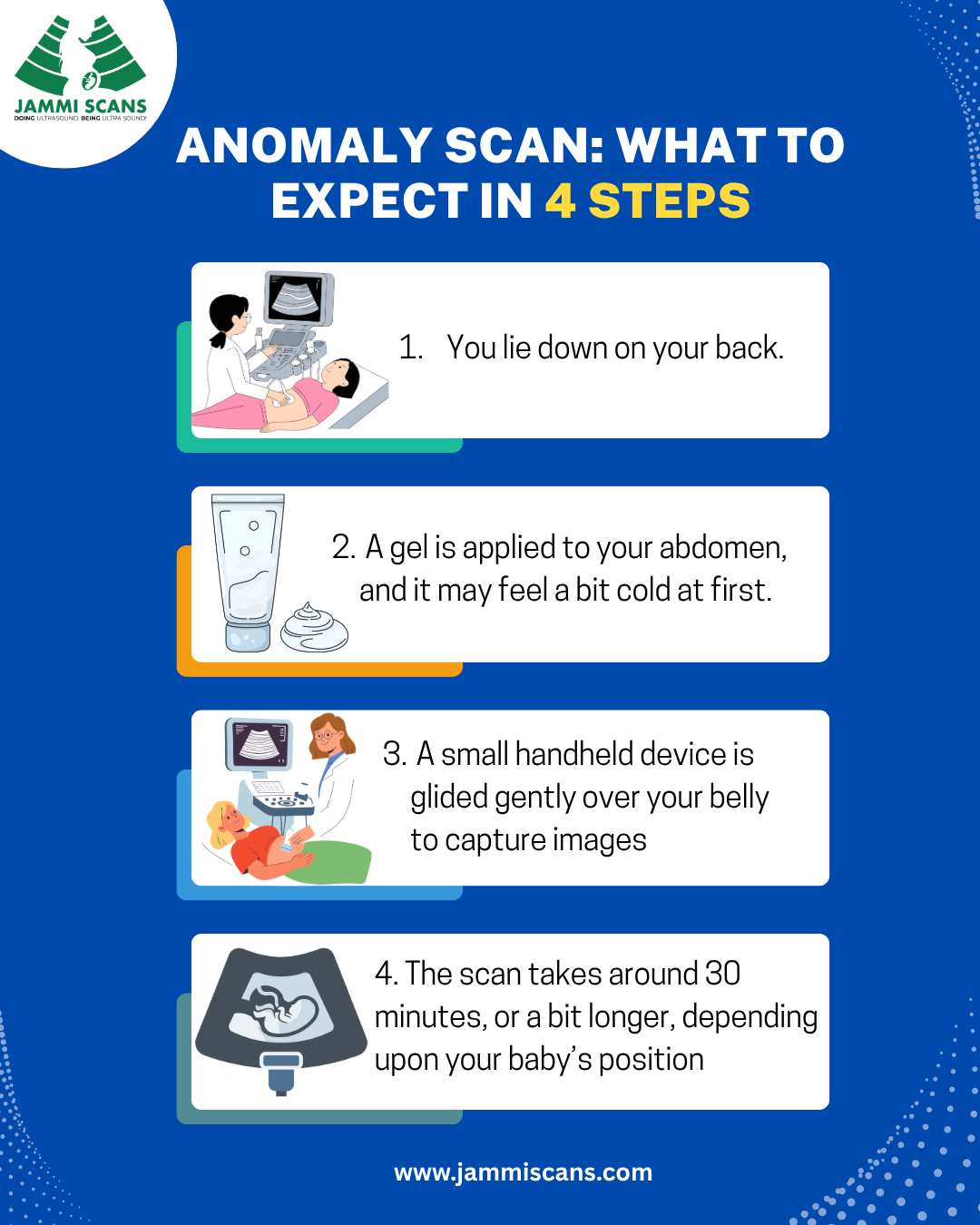
- You lie down on your back, and a gel is applied to your abdomen.
- The gel may feel a bit cold at first.
- A small handheld device is glided gently over your belly to capture images.
- The scan takes around 30 minutes, or a bit longer depending upon your baby’s position.
In a study, many women described this as a positive experience, as it helps them feel more connected to their baby.
Why Do Some Women Feel Slight Discomfort?
Even though the scan is not painful, you may feel a little uncomfortable at times.
This can happen because:
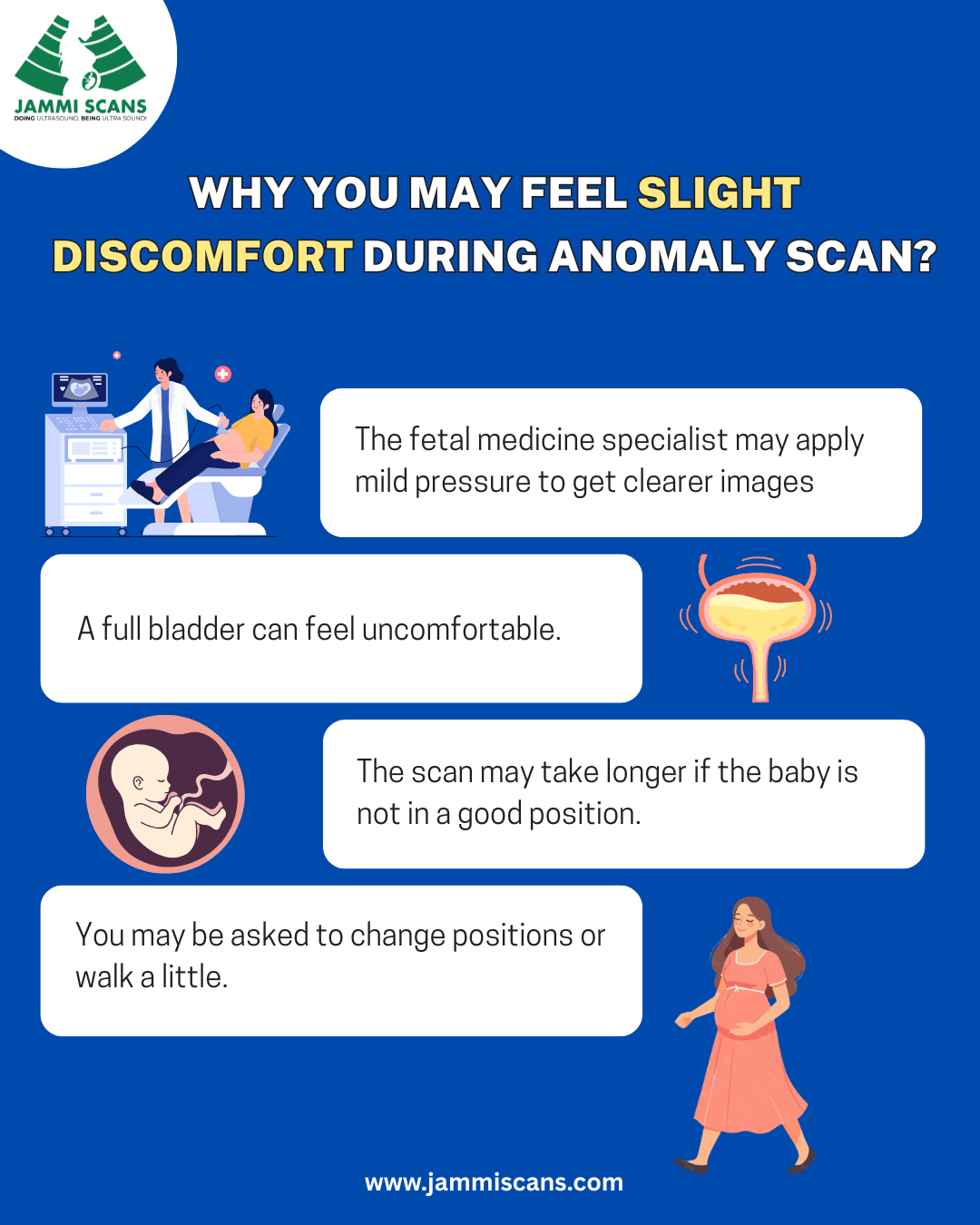
- The fetal medicine specialist may apply mild pressure to get clearer images.
- A full bladder can feel uncomfortable.
- The scan may take longer if the baby is not in a good position.
- You may be asked to change positions or walk a little.
Is an Anomaly Scan Safe for Mother and Baby?
Yes, the scan is considered absolutely safe.
It uses sound waves, not radiation. So there are no known harmful effects on the mother or the baby.
Studies have also shown that ultrasound scans do not affect the baby’s long-term physical or mental development.
This makes it a trusted and widely used method in pregnancy care.
How do you prepare for an anomaly scan?
An anomaly scan procedure does not require any special preparation.
Still, a few simple steps can make the process easier:
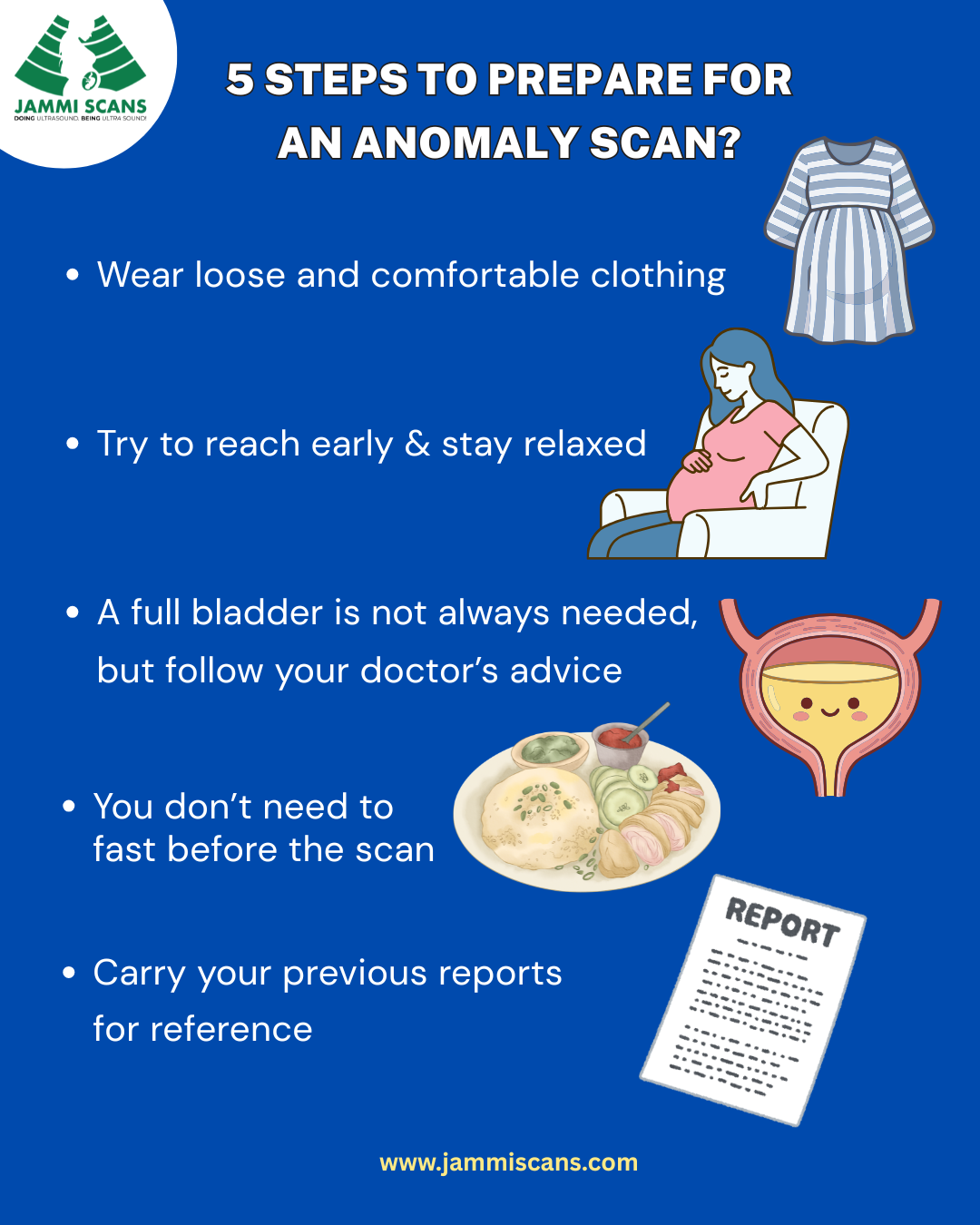
- Wear loose and comfortable clothing
- Try to reach a little early and stay relaxed
- A full bladder is not always needed, but follow your doctor’s advice
- You don’t need to fast before the scan
- Carry your previous reports for reference
When Should You Be Concerned During the Anomaly Scan?
In most cases, the scan is completed without any issues.
But you should inform the fetal medicine specialist or sonographer if you notice anything unusual.
For example:
- You feel pain or strong discomfort when pressure is applied
- You feel uncomfortable due to a very full bladder
- You feel dizzy or lightheaded while lying down
- You notice any irritation from the gel
These are usually easy to manage, and the specialist can help you feel comfortable almost immediately.
The anomaly scan is a safe and painless procedure that plays a crucial role in checking your baby’s development, and it’s an important scan that should not be missed.
FAQ
1. Is It normal to cry during an ultrasound?
Yes, it is completely normal to cry during an ultrasound. Pregnancy brings a lot of emotions. And hormones can make you more sensitive than usual. For many women, seeing the baby for the first time can feel overwhelming. Crying in that moment is a natural response.
2. Why does the doctor press the abdomen during the scan?
It’s done to get better images. Sometimes, the baby’s position makes it hard to see certain organs clearly. So the doctor gently presses the abdomen. This helps move the baby slightly to get clearer and more detailed images of the baby’s organs.
3. Does it hurt after an anomaly scan?
No, it does not hurt after an anomaly scan. But you might notice slight soreness. This usually happens because gentle pressure is applied during the scan. It settles on its own within a short time.
4. Should I drink more water before an anomaly scan?
Not always, a full bladder is usually not required here. But some centres may still ask you to drink water, so it’s best to follow your doctor’s instructions.
Reviewed by Dr. Deepthi Jammi - Fetal Medicine Specialist
Dr. Deepthi Jammi (Director, Jammi Scans) is a qualified OB/GYN and Post-Doc in Maternal Fetal Medicine. As a pregnancy ultrasound expert, she is passionate about healthy pregnancies and works towards spreading awareness on the latest diagnostic options available for parents to choose from. Dr.Deepthi has received gold medals and awards in Fetal Medicine at international and national conferences, and has appeared in numerous prestigious regional magazines and TV interviews.